Every homeowner faces this choice: go modern and minimal, or keep things traditional and characterful? In Edinburgh, the answer often depends on your property as much as your taste. A sleek handleless vanity looks stunning in a Quartermile apartment but can feel jarring in a Victorian Marchmont tenement. We have fitted both styles across Edinburgh for 15 years — here is what we are seeing in 2026 and what works where.
What Edinburgh Homeowners Are Choosing in 2026
Based on what we see at home visits and the installs we complete every week, the breakdown is clear:
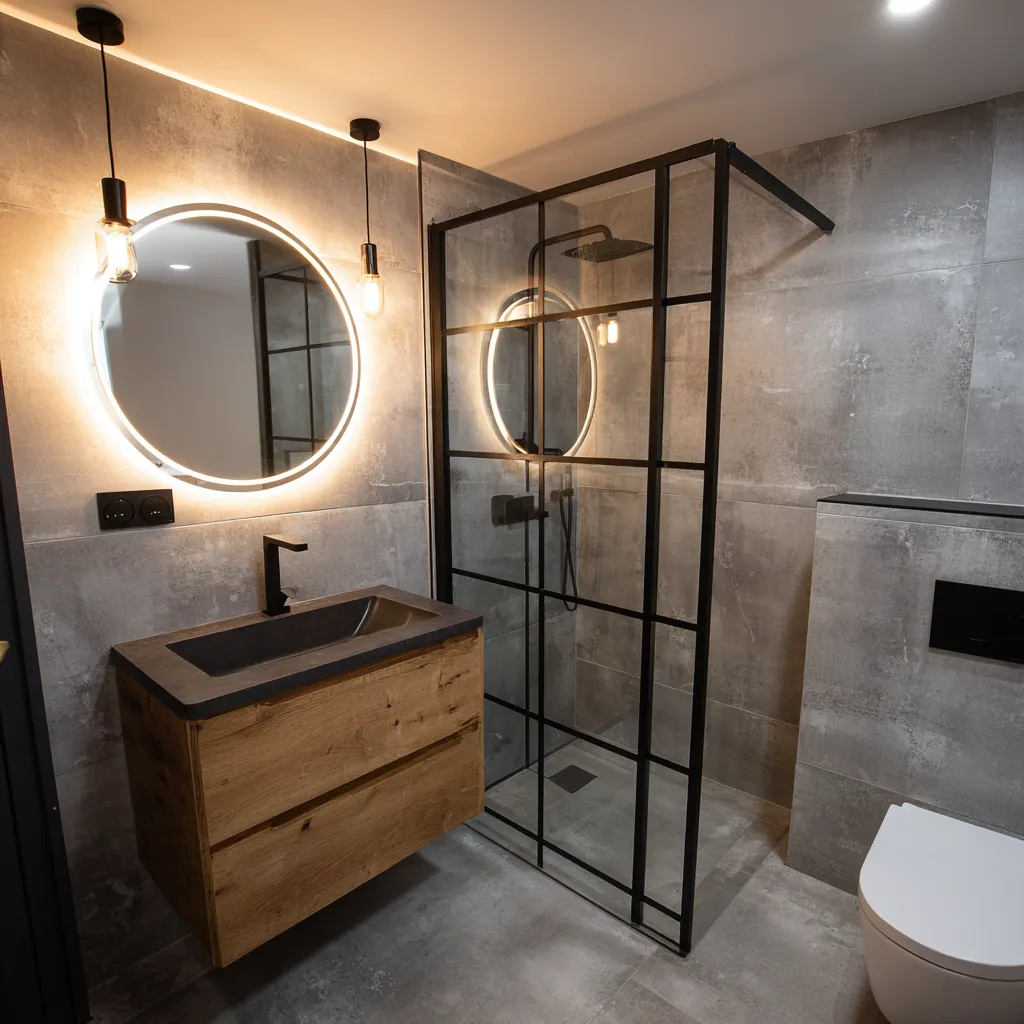
- 70% modern or contemporary — clean lines, wet wall panels, matte black or brushed brass fixtures, wall-hung toilets, frameless glass shower screens. This is the dominant choice across Edinburgh in 2026 and it is not slowing down.
- 20% transitional — modern functionality with nods to character. Think metro tiles paired with brass fixtures, a freestanding bath shape in a modern material, or warm wood-grain vanities with contemporary handles.
- 10% traditional — particularly in period properties where owners want to honour the building's character. Roll-top baths, crosshead taps, high-level cisterns.
The clear trend: Edinburgh homeowners want modern functionality — easy cleaning, a powerful shower, no grout mould — but often with warm, characterful finishes that suit their property. Very few people want a bathroom that feels clinical, and very few want one that feels dated. The sweet spot is somewhere in between, and that is exactly where the market has moved.
Modern Bathrooms: Clean, Minimal, Low Maintenance
A modern bathroom is defined by clean lines, minimal visual clutter, and fixtures that prioritise function alongside form. Wall-hung toilets and vanities float above the floor, making the room feel more spacious and easier to clean underneath. Frameless glass shower screens replace bulky enclosures. Wet wall panels in stone or marble effect replace tiles entirely — no grout lines, no mould, no scrubbing. LVT flooring sits warm underfoot and handles moisture without complaint. Matte black or brushed brass tapware replaces chrome. LED mirrors with demister pads replace basic medicine cabinets. Rainfall showers become the centrepiece.
Why Modern Works in Edinburgh
Edinburgh's climate is damp. There is no way around it. Traditional tiled bathrooms in Edinburgh homes develop grout mould faster than in drier parts of the UK, and that means more maintenance, more resealing, and more frustration. Wet wall panels eliminate that problem entirely — they are 100% waterproof with no grout lines for mould to colonise. That alone makes modern the practical choice for many Edinburgh homeowners.
Wall-hung toilets and compact vanities also make a real difference in small tenement bathrooms where every centimetre counts. Wet wall panels save 10-15mm compared to tiles on battens, which does not sound like much until you are working in a bathroom that is barely 1.5 metres wide.
Best For
- New builds in Livingston, South Queensferry, and Dunfermline
- Modern apartments in Quartermile, Fountainbridge, and Leith Shore
- Anyone who prioritises easy maintenance and wants a bathroom that looks as good in five years as it does on day one
Edinburgh Consideration
In a period tenement with cornicing and high ceilings, ultra-modern can feel out of place. If you live in Marchmont, Bruntsfield, or the New Town and your hallway has original Victorian features, a stark grey and white bathroom with matt black fixtures can feel like it belongs in a different building. We recommend softening with warm-toned wet wall panels — walnut, travertine effect, or warm marble — rather than going full concrete-grey. The result is still modern and low maintenance, but it sits more comfortably in the property.
Traditional Bathrooms: Character, Heritage, Craftsmanship
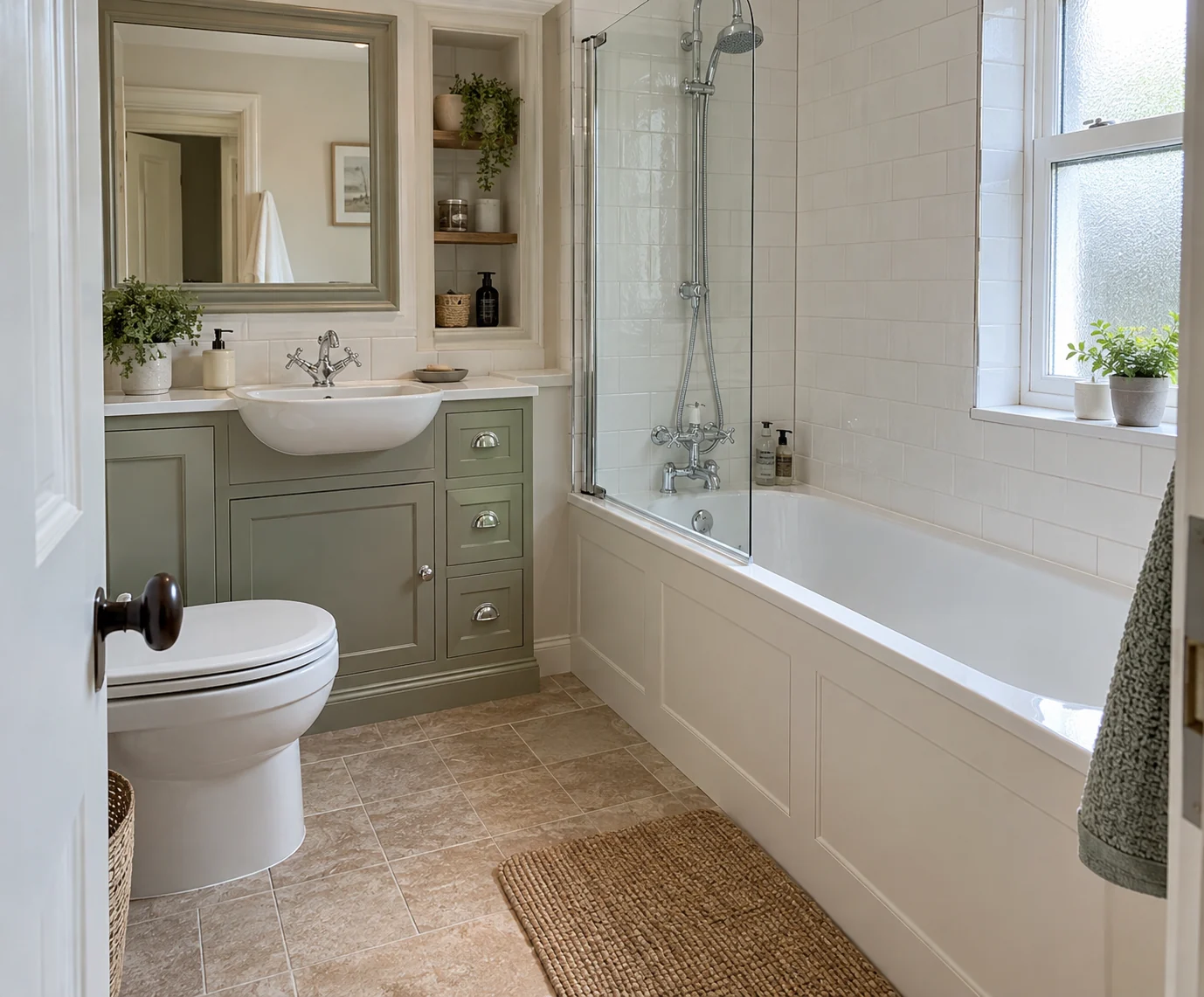
A traditional bathroom honours the period of the building. High-level cisterns with pull chains. Roll-top or claw-foot baths. Crosshead taps in brass or chrome. Metro tiles in a brick bond pattern. Pedestal basins. Period-style column radiators. Wooden toilet seats. The aesthetic is warm, familiar, and undeniably characterful.
Why Edinburgh Homeowners Choose Traditional
Because it suits the building. Edinburgh has some of the finest Georgian and Victorian architecture in the UK, and many homeowners feel — rightly — that a bathroom should respect that heritage. A New Town Georgian townhouse with original cornicing, ceiling roses, and shuttered windows deserves a sympathetically designed bathroom. Listed buildings may actively require it, with conservation officers having a say in what you can and cannot change.
Beyond listed properties, there is a genuine aesthetic appeal. A well-executed traditional bathroom in a Stockbridge or Inverleith home feels elegant, considered, and timeless in a way that trend-driven modern designs sometimes do not.
Practical Concerns
Traditional bathrooms are beautiful but they come with trade-offs that you should go in with your eyes open about:
- Grout-heavy designs — metro tiles mean grout lines, and grout lines in Edinburgh's damp climate mean maintenance. You will need to reseal and clean regularly
- Freestanding baths in small spaces — a roll-top bath is stunning in a large bathroom, but impractical in a small tenement space where a walk-in shower would serve you better every day
- Pedestal basins offer zero storage — in a small bathroom, losing the vanity unit means losing the only practical storage you have
- Period radiators are less efficient — they look wonderful but heat the room more slowly than modern towel rails or underfloor heating
Best For
- Listed buildings where conservation requirements apply
- Georgian and Victorian homes in the New Town, Stockbridge, and Inverleith where character is valued
- Owners who genuinely love the aesthetic and accept the maintenance trade-off
- Large bathrooms where a freestanding bath has room to breathe
The Transitional Sweet Spot: Modern Function, Period Character
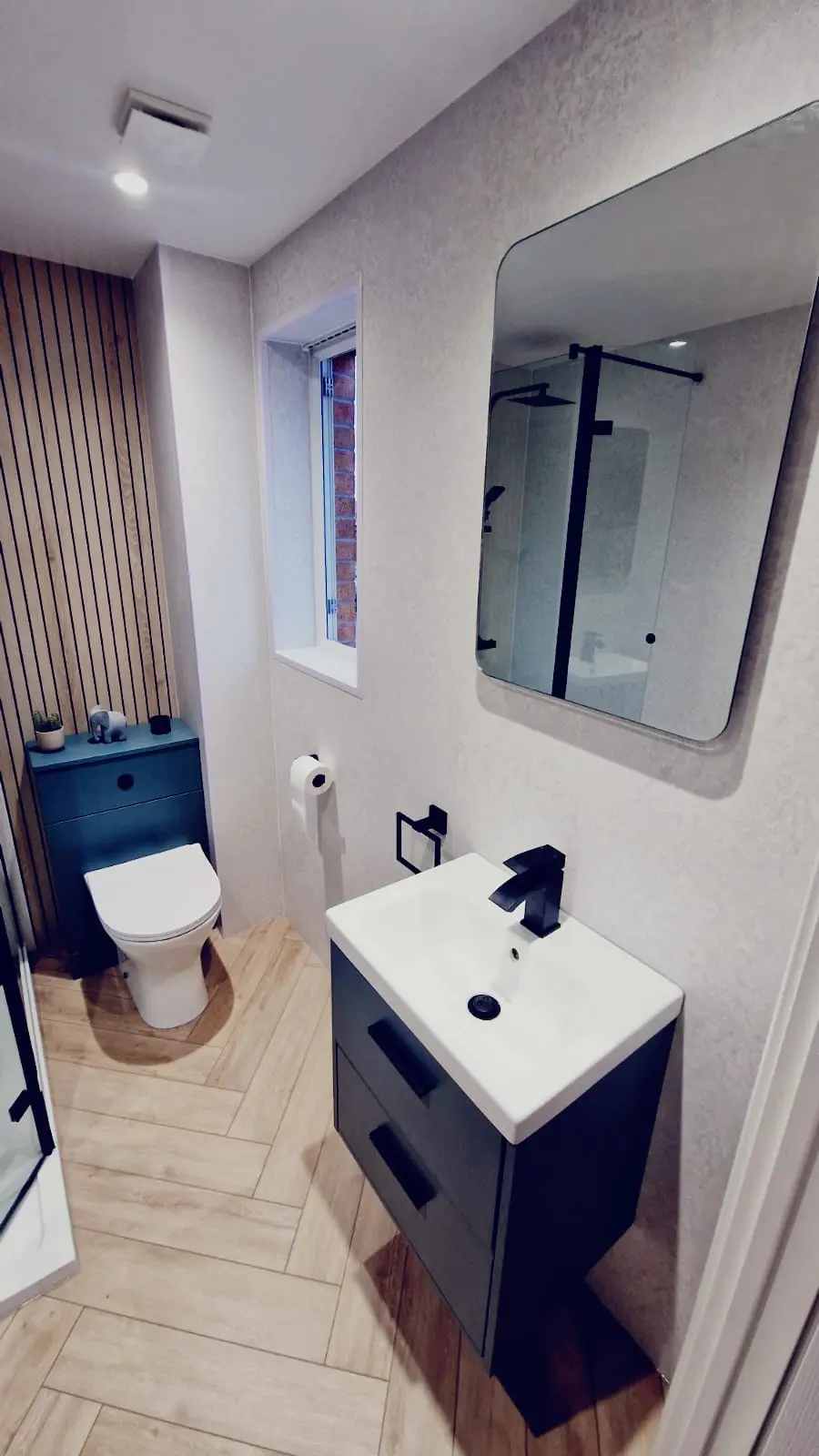
This is where the market is heading in Edinburgh, and it is the configuration we fit most often in 2026 across EH1 to EH12 postcodes. Transitional design takes the practical advantages of modern bathrooms — wet wall panels, wall-hung fixtures, frameless glass, LVT flooring — and pairs them with finishes that feel warm, textured, and characterful.
What does that look like in practice?
- Wet wall panels in warm marble or wood-effect tones — all the waterproof, grout-free benefits of modern panels, but in colours that feel warm rather than clinical
- Brushed brass fixtures — the colour feels traditional and warm, but the profiles are modern and streamlined. No ornate crosshead detail, just clean lines in a warm finish
- Wall-hung vanity with a wood-grain front — you get the floating, space-saving benefit of modern design with a natural material look that suits older properties
- Frameless glass with brass fittings — the shower feels open and modern, but the hardware ties back to the warmer, more traditional palette
- LVT flooring in natural stone or warm oak effect — practical, waterproof, warm underfoot, and it looks like it belongs in a period property
Why is this so popular in Edinburgh? Because it gives you the easy maintenance of modern design — no grout mould, no scrubbing, no resealing — with warmth that suits period properties. It is the best of both worlds, and for tenement flats in particular, where you need every practical advantage in a small space but do not want your bathroom to feel like it was dropped in from a different building, it is the natural choice.
What Works in Your Property Type
Edinburgh's housing stock is incredibly varied. What works in one property can feel completely wrong in another. Here is our recommendation based on the hundreds of bathrooms we have fitted across the city:
Victorian Tenement (Marchmont, Bruntsfield, Stockbridge)
Transitional or modern with warm tones. Avoid ultra-stark white and grey — it clashes with the building's character. Warm marble-effect wet walls, brushed brass fixtures, and wood-grain vanities work brilliantly. Walk-in showers are almost always a better use of space than a bath in these properties.
Georgian Conversion (New Town, Inverleith)
Traditional sympathetic or transitional. If the property is listed, check what is permitted before committing to a design — your conservation officer may have strong views. For unlisted Georgian properties, transitional gives you period-appropriate warmth without the maintenance burden of a fully traditional bathroom.
1930s-1950s Semi (Corstorphine, Morningside)
Modern works perfectly here. These properties do not have strong period character in the bathroom — the original fittings were functional, not decorative — so there is nothing to clash with. Clean lines, wet wall panels, and contemporary fixtures feel right at home.
New Build (Livingston, Dunfermline, South Queensferry)
Fully modern. These properties are designed for it. The room dimensions, plumbing runs, and overall aesthetic all point towards contemporary design. Going traditional in a new build feels forced.
Cottage or Bungalow (Colinton, Currie, Balerno)
Transitional with natural tones. Stone-effect wet walls, wood-grain vanity units, and warm brass fixtures create a bathroom that feels connected to the property rather than separate from it. Natural light is often better in these properties, so you can go slightly darker with your palette without the room feeling small.
Trends That Last vs Trends to Be Cautious About
A new bathroom should last 15 to 20 years. That means the choices you make today need to still look right in 2040. Some current trends have proven staying power. Others are riskier.
Trends That Are Here to Stay
- Wet wall panels — this is not a trend, it is a practical evolution. Grout-free, waterproof, and available in hundreds of finishes. Once you have lived with wet walls, you will never go back to tiles
- Matte black fixtures — now into their sixth year of strong popularity with no sign of fading. The finish has proven durable and the look is versatile enough to work in modern, transitional, and even some traditional settings
- Walk-in showers — practical, accessible, and the most requested feature we see at home visits. Over-bath showers are in terminal decline
- LVT flooring — the performance is proven. Waterproof, warm, quiet underfoot, and it handles the flex in Edinburgh's older timber sub-floors that ceramic and porcelain cannot
Trends to Be Cautious About
- Very bold colours — dark green, deep terracotta, and navy are popular right now, but a bathroom is not a feature wall you can repaint in a weekend. If your wet walls are forest green and the trend moves on in three years, you are stuck with it for another 12
- Extremely minimalist designs — a bathroom with nowhere to put toiletries, no storage, and a single floating shelf might photograph well, but living with it daily is a different story. Storage matters
- Trend-only fixtures — that freestanding copper basin you saw on Instagram might not suit a Marchmont flat. And sourcing a replacement part in five years might be impossible. Stick with established manufacturers for sanitaryware
Our Advice
Choose timeless neutrals for permanent fixtures — wet walls, flooring, sanitaryware, and shower glass. These are the elements that are expensive to change. Then express personality through replaceable items: towels, accessories, plants, artwork. You can update a bathroom's feel for under a hundred pounds without touching a single fixture. You cannot change a bold wet wall panel without a full refit.
Not Sure Which Style Suits Your Home?
Book a free home design visit. We will come to your property, look at the space, bring real samples, and help you choose the right style for your building and your lifestyle. Fixed price quote on the day — no obligation, no follow-up calls if you are not interested.
Call 0131 357 3869 or request a quote online.
Get a Free Quote