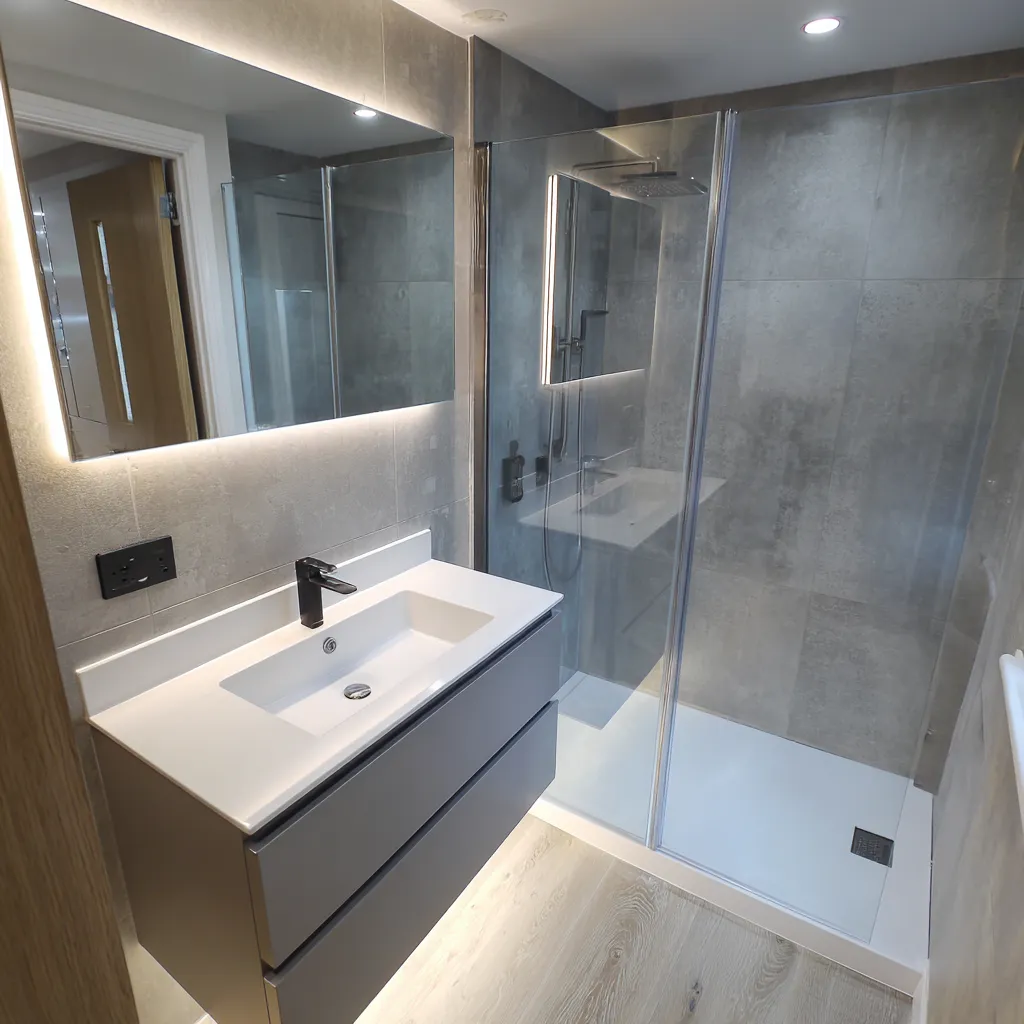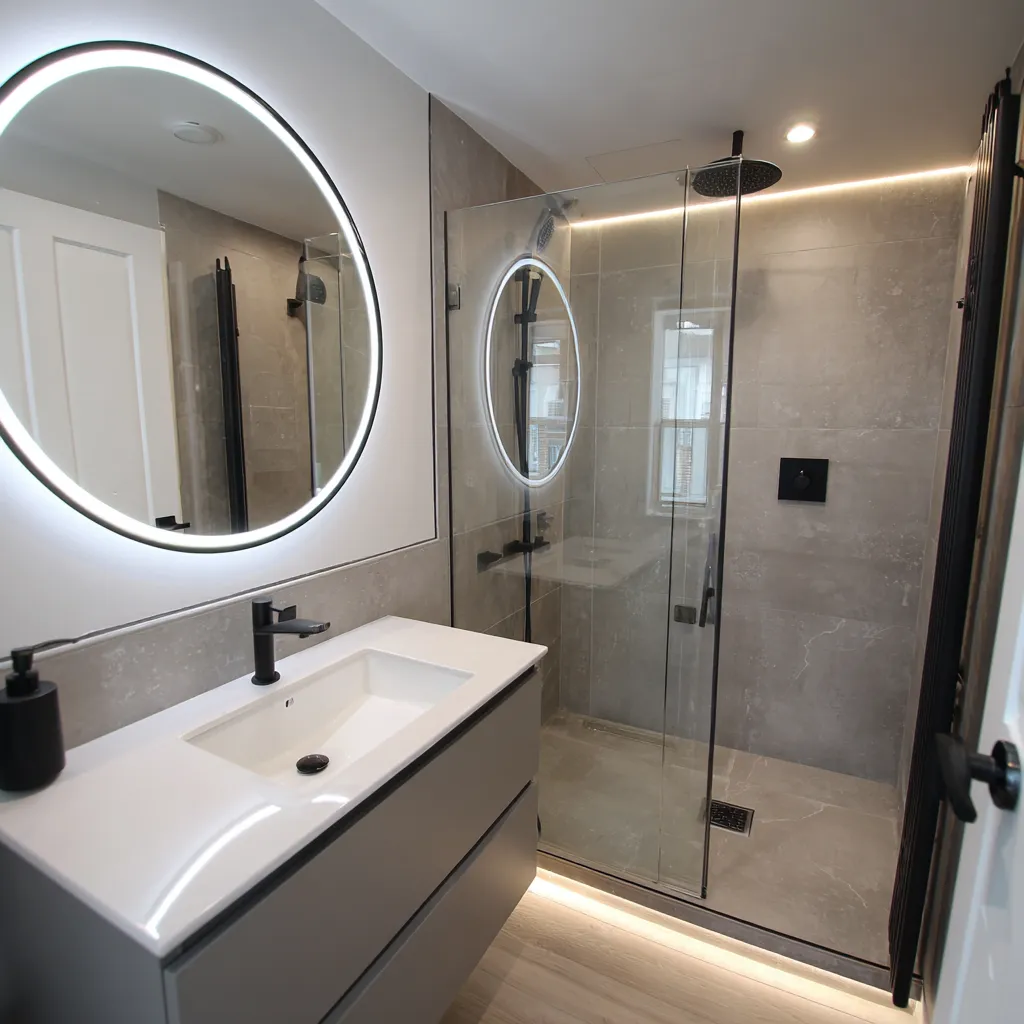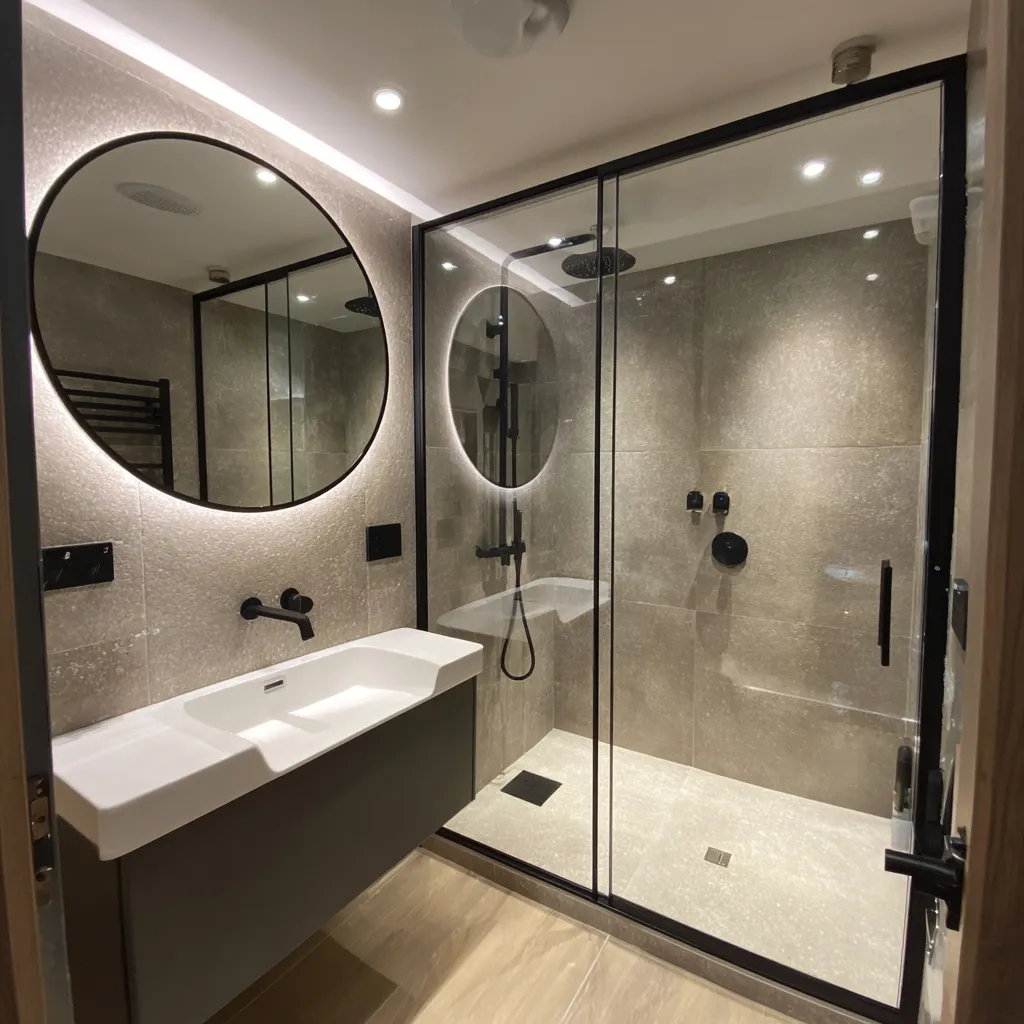
Whether you are planning ahead, adapting after an injury, or making a bathroom safer for an elderly family member — accessibility should never mean compromising on style. We have fitted dozens of accessible bathrooms across Edinburgh, from level-access wet rooms in Morningside bungalows to walk-in showers with grab rails in Leith tenements. Here is what you need to know.
What Makes a Bathroom Accessible?
An accessible bathroom removes barriers that make washing, toileting, and moving around the room difficult or dangerous. The specific features depend on the person, but these are the most common elements we install:
- Level access — no step to enter the shower. This means either a wet room or a low-profile tray that sits flush with the floor.
- Grab rails in key positions — beside the toilet, inside the shower, and at the entry point. Properly fixed into the wall structure, not just the plaster.
- Non-slip flooring — LVT with an R10+ slip rating is our standard. It is warm underfoot, waterproof, and handles the flex in older Edinburgh floorboards that ceramic cannot.
- Walk-in shower with fold-down seat — wall-mounted, folds flat when not in use. Provides a safe, comfortable place to sit while showering.
- Raised toilet height — comfort height toilets sit at 450–480mm compared to the standard 400mm. This makes sitting down and standing up significantly easier, particularly for anyone with hip or knee problems.
- Wider door — 800mm or more is recommended for wheelchair or walker access. Not always possible in Edinburgh tenements, but we can advise on your options.
- Good lighting and contrast — LED mirrors provide bright, even light. Contrasting grab rails against wall panels make them easier to see and reach.
- Lever taps — easier to operate than twist taps for anyone with limited grip strength, arthritis, or reduced hand mobility.
Accessibility Features We Install
No tray or a low-profile tray that sits level with the bathroom floor. Level access from the bathroom into the shower with no step to negotiate. This is our most requested accessibility feature and the single change that makes the biggest difference to safety and independence.
The entire bathroom floor is waterproofed with a gentle gradient towards a central or linear drain. This provides complete level access throughout the room with no tray, no step, and no threshold. Wet rooms work in most Edinburgh properties including tenements — with proper floor preparation and waterproof tanking of the timber joists.
Available in stainless steel, chrome, or matte black to match your fixtures and fittings. We position grab rails based on the specific needs of the person using the bathroom — not in a standard layout from a catalogue. Modern grab rails do not look institutional. They come in the same finishes as your taps and shower and blend into the overall design.
Wall-mounted and folds completely flat against the wall when not in use. Strong enough to support any weight. These are useful even in non-accessible bathrooms — somewhere to sit while shaving legs, or a shelf for shampoo bottles when folded up.
70–80mm higher than a standard toilet. Easier to sit down and stand up from, especially for anyone with hip replacements, knee problems, or general mobility issues. A comfort-height toilet looks identical to a standard one — the only difference is the height.
Thermostatic shower valves and mixer taps prevent scalding by maintaining a constant, safe water temperature. This is essential for anyone with reduced sensation, cognitive impairment, or slower reaction times. Anti-scald valves are included as standard in all our installations.
Scottish Grants and Funding
Bathroom adaptations can be expensive, but there are several Scottish schemes that may help with the cost. Here is a summary of the main options available to Edinburgh homeowners.
- Scheme of Assistance (City of Edinburgh Council) — Under the Housing (Scotland) Act 2006, the council has a duty to provide assistance for essential adaptations to the homes of disabled people. This can include grants for bathroom adaptations such as level-access showers, grab rails, and wet room conversions. Contact the council's housing adaptations team to find out if you qualify.
- Occupational therapy assessment — This is usually the first step. Your GP can refer you to an occupational therapist, or you can contact the council directly. The OT visits your home, assesses your specific needs, and recommends adaptations. Their report is often required before grant funding is approved.
- Care & Repair Edinburgh — A free, independent service for homeowners and private tenants aged 60 and over, or those who are disabled. They can help with grant applications, recommend approved contractors, and in some cases fund adaptations directly. They are a valuable first point of contact if you are unsure where to start.
- Disabled Facilities Grants — Available through Edinburgh Council for essential adaptations to the homes of disabled people. These are means-tested but can cover a significant portion of the cost. The assessment process involves an OT report and a financial assessment.
- Adapting for Purpose scheme — A Scottish Government scheme specifically designed to fund disabled adaptations in registered social landlord properties. If you rent from a housing association, speak to your landlord about this route.
- VAT relief — If you are disabled or have a long-term illness, you may be eligible for zero-rated VAT on certain bathroom adaptations. This can save 20% on the cost of qualifying works. You do not need to be registered disabled — a letter from your GP confirming a chronic condition can be sufficient.
Important: We are not grant specialists, but we can provide detailed, itemised quotes in the format that councils and funding bodies require. We have worked with occupational therapy recommendations before and can install to the exact specification they set out.
Accessible Bathrooms in Edinburgh Tenements
Edinburgh tenements present specific challenges for accessible bathroom conversions, but we work in them every week and know what to expect.
- Space — Tenement bathrooms are typically small, around 1.5–2 metres wide. Removing the bath and installing a walk-in shower or wet room actually maximises the usable floor area, giving you more room to move safely than the original layout.
- Floor — Timber joist floors in tenements need reinforcement and proper waterproof tanking for wet room conversions. We do this regularly — it adds 1–2 days to the installation but is essential for a lasting, watertight result.
- Grab rail fixing — In older tenements with lath and plaster walls, grab rails must be fixed into the timber studs behind the plaster, not just the surface. We locate studs with specialist equipment and use appropriate fixings that can take the required load. This is not optional — a grab rail that pulls out of the wall is worse than no grab rail at all.
- Threshold — Tenement bathroom doors typically have a threshold step. For true level access, this may need modifying or removing. We can advise whether this is feasible in your property without affecting the structural floor.
- Stair access — If the person using the bathroom has mobility issues, consider whether the bathroom is on an accessible floor. Ground-floor tenement flats are often the most suitable for accessible adaptations. In upper-floor flats, the bathroom conversion may be part of a wider adaptation plan that includes stairlift provision.
Accessibility Does Not Mean Institutional
This is the most important thing we tell clients who are hesitant about accessible adaptations. A well-designed accessible bathroom looks like any other high-quality modern bathroom. The wet room trend has made level-access showers desirable for everyone, not just those who need them for mobility reasons.
- Grab rails now come in the same finishes as your taps and shower — matte black, chrome, brushed brass. They look like design features, not hospital fittings.
- Fold-down seats are slim, discreet, and fold completely flat against the wall when not in use.
- Wall-hung toilets are cleaner-looking than standard toilets and allow flexible height positioning during installation.
- Wet wall panels in stone, marble, or concrete-effect finishes create a seamless, modern look while being completely waterproof and easy to clean.
The end result should be a bathroom you are proud of — one that visitors admire, not one that looks like it belongs in a care home. That is the standard we work to.
Planning Ahead
If you are renovating your bathroom anyway — even if you do not currently need accessibility features — future-proofing is straightforward and adds very little to the cost.
- Install blocking behind the wet wall panels — timber blocking in the positions where grab rails might be needed in the future. This means rails can be added later in minutes without re-opening the walls. We do this as standard when clients request it.
- Choose a walk-in shower — even if you do not need level access now, a walk-in shower is the most popular choice for Edinburgh bathrooms anyway. You are choosing the better option regardless of accessibility.
- Comfort-height toilets are becoming standard — they are more comfortable for most adults regardless of mobility. There is no reason not to choose one.
- Non-slip LVT flooring — this is standard in all our packages. If you are having a bathroom fitted by us, you are already covered on slip resistance.
- Thermostatic controls — again, these are included in all our installations. Anti-scald protection benefits everyone, not just those with reduced sensation.
The cost of future-proofing during a renovation is minimal. The cost of retrofitting later — when walls need to be re-opened and floors re-laid — is significantly higher. If there is any chance you or a family member will need accessibility features in the next 10–15 years, plan for them now.
Or call us on 0131 357 3869 to discuss your accessible bathroom options.