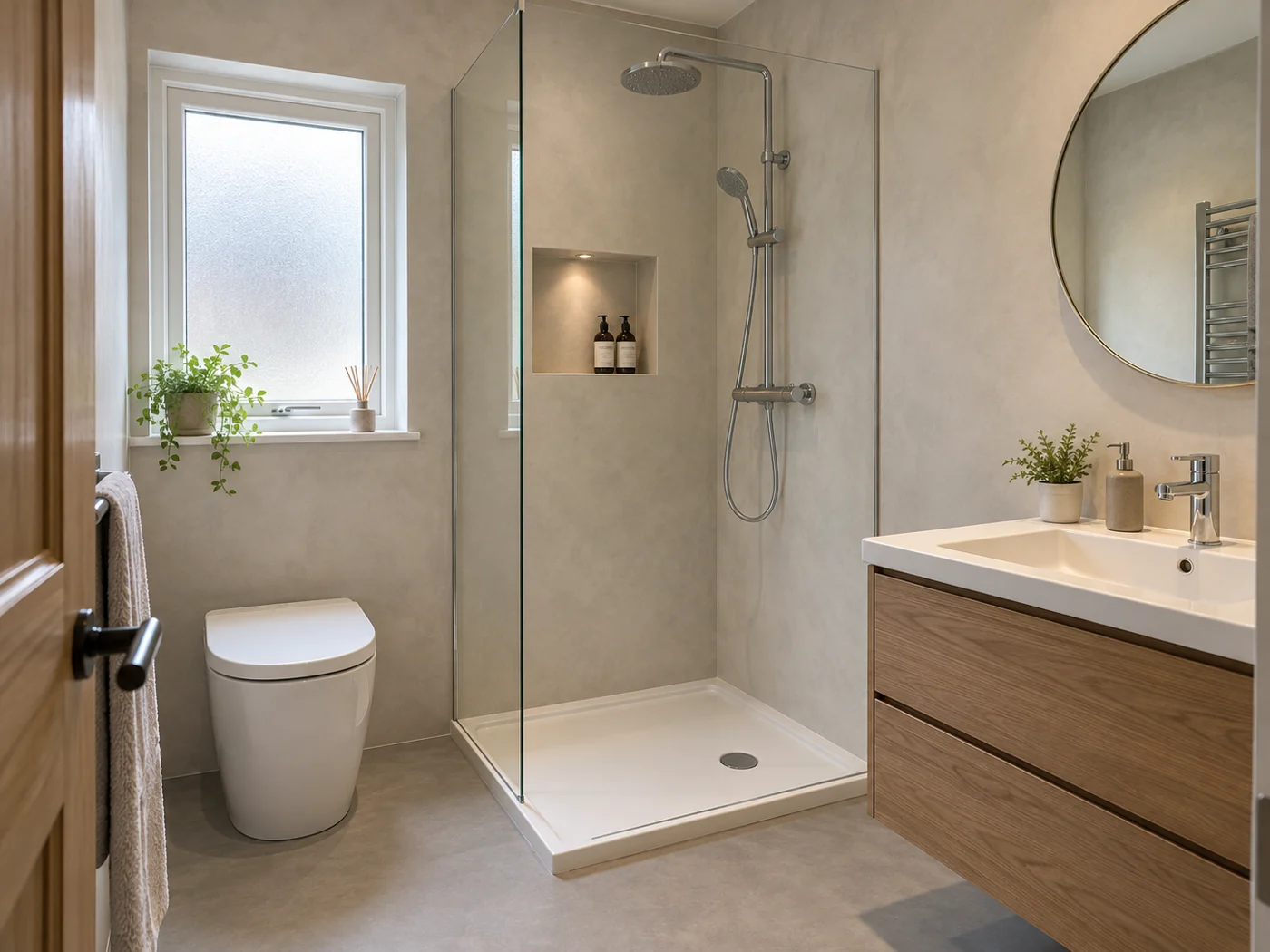
What Does Microcement Look Like?
Microcement is a thin decorative coating applied in layers. The surface usually has gentle changes in colour and texture rather than the repeating pattern of a printed panel. Those variations are part of its appearance. A small colour card will not show exactly how a whole wall will look, so ask to see a larger finished sample in similar lighting.
Think about the other surfaces beside it. A warm grey wall can look different against white basins and toilets, brass taps or a dark wood vanity. Take the sample into your bathroom and view it during the day and under the lights you plan to use. Choose the finish because you like the whole room, rather than because a photograph describes it as luxury.
Check the Product Is Suitable for the Shower
Products sold as microcement do not all have the same specification. A decorative coating suitable for a dry wall is not automatically suitable for a shower floor. Ask which complete system is proposed, including preparation, waterproofing, coating and protective finish. Get written confirmation that the manufacturer supports its use in each part of your bathroom.
The protective sealer matters. Topciment's sealing guidance explains that sealing protects its microcement finish. That does not mean any sealer makes every surface suitable for standing water. Follow the instructions for the exact products being fitted. Ask how corners, pipe openings and the shower drain will be sealed, because those details are hidden once the work is finished.
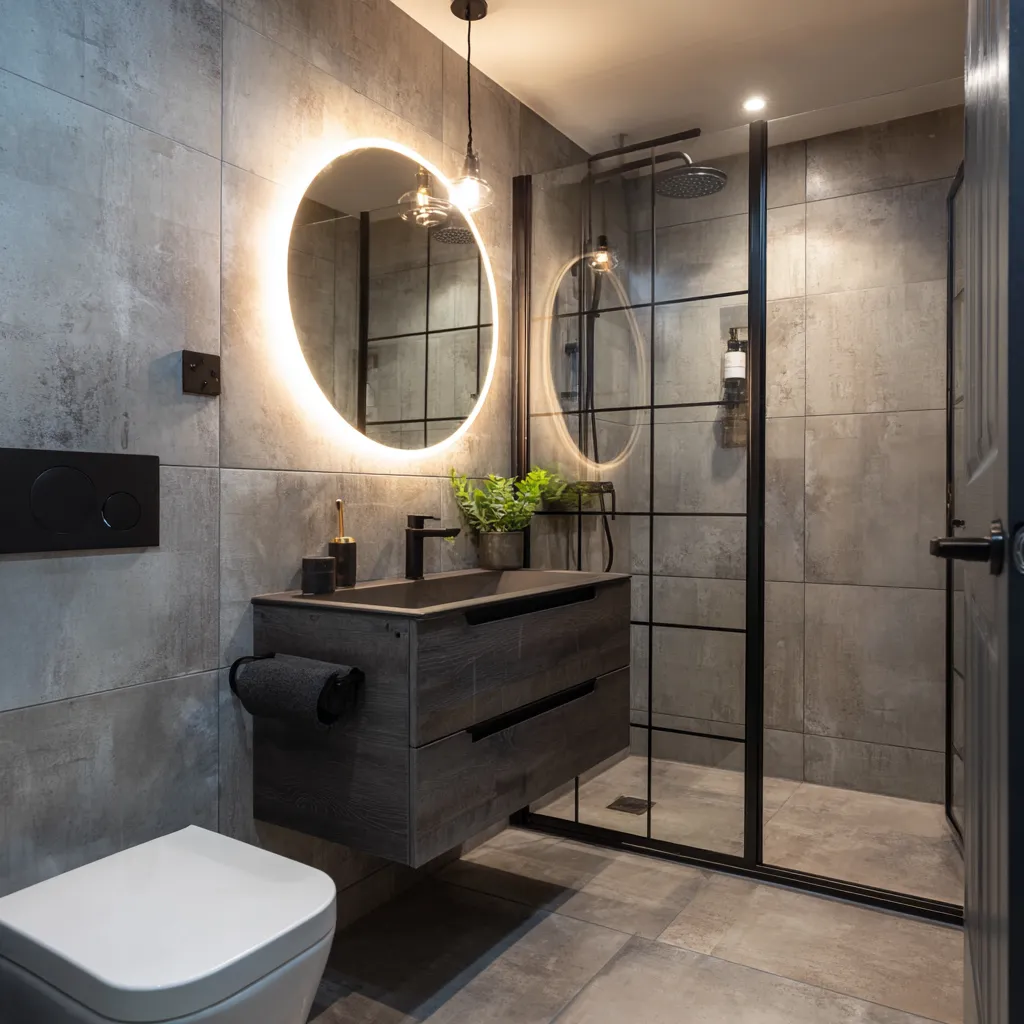
The Wall and Floor Underneath Still Matter
A smooth coating cannot put right a loose tile, moving floor or damp wall. The fitter needs to check the surface underneath before agreeing what can stay. In an older Edinburgh flat, this may mean checking floorboards, earlier repairs and uneven walls. Do not assume coating over everything is the cheapest answer until that inspection has taken place.
Ask the quotation to separate preparation from the decorative finish. It should explain which old surfaces will be removed, what repairs are included and how any further damage will be priced. If the floor needs strengthening or levelling, discuss that before choosing the finished floor height. The bathroom doorway and shower drainage must still work once all the layers are in place.
Ask who will inspect the prepared surface before coating begins. Keep the agreed sample and product names so any later question about colour, texture or care can be checked against the finish you approved.
Plan for Drying Time and Everyday Cleaning
Microcement work involves several stages, and the room may look finished before it is ready for water. Ask when the bathroom can be walked on, when fittings can be used and when the shower can get wet. These dates depend on the chosen system and conditions in the room. Arrange another shower if yours will be unavailable during that period.
Get the cleaning instructions before buying your usual sprays. Abrasive pads and unsuitable chemicals can damage some finishes. Ask which cleaner to use, how spills should be dealt with and whether the protective finish needs maintenance later. Also ask how a scratch or local repair would look. A repair may be visible where the colour or texture meets the older surface.
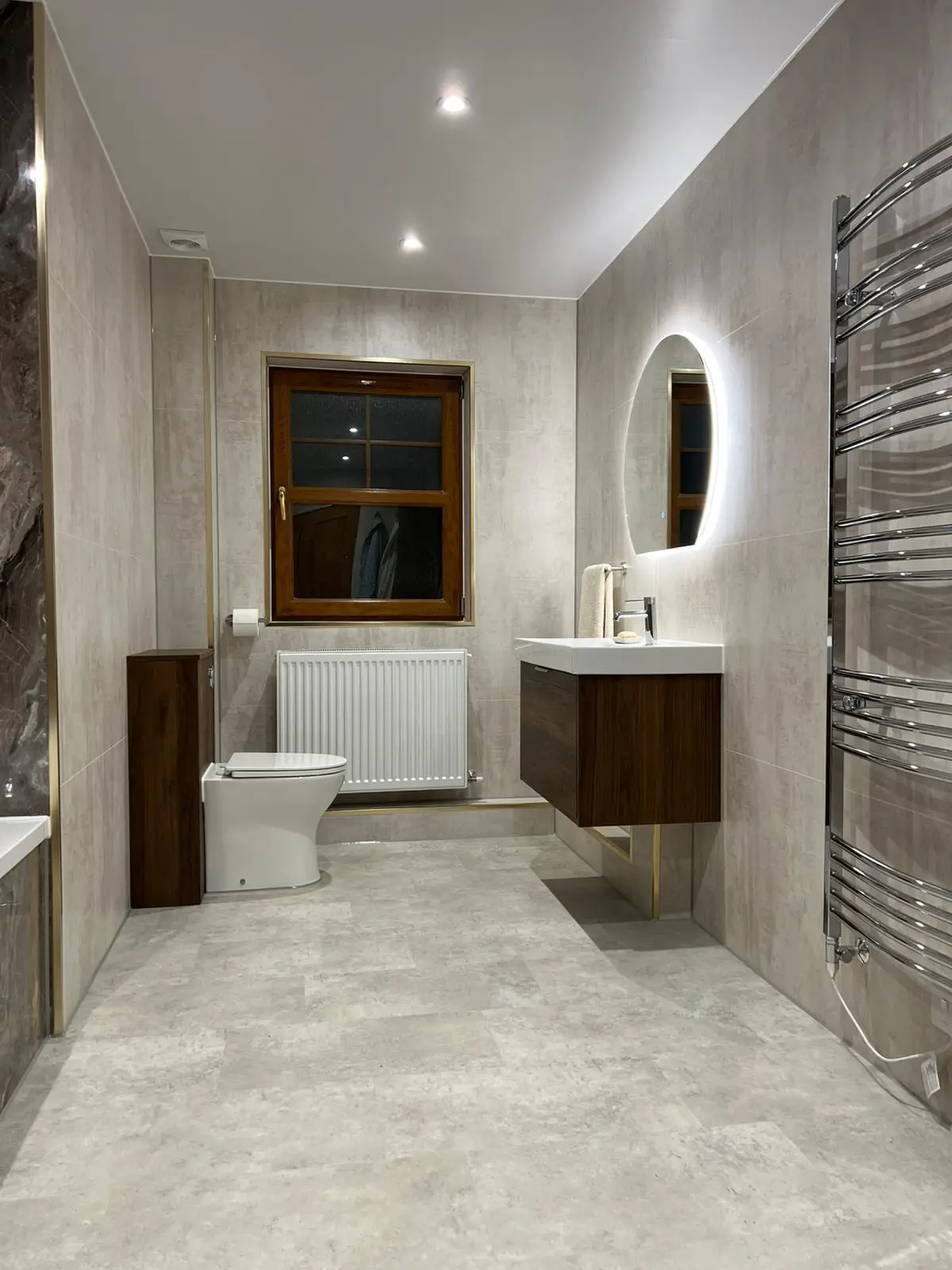
Compare Microcement with Tiles and Wet Wall Panels
Microcement can suit a simple room with few visible joints, but it is not the only way to get that appearance. Large tiles or stone-effect panels may give you a look you like with a different fitting process. Compare actual samples, cleaning instructions and complete installed quotations. Do not compare the material price alone when preparation and labour differ.
Our guide to wet wall panels and bathroom tiles explains those alternatives. If you are also changing the shower, read about wet rooms and standard showers. Choosing the wall finish and choosing the shower floor are separate decisions, even when you want them to look similar. Both need to suit your room and the way you use it.
Discuss the Finish Before Agreeing Your Bathroom Refit
Bring a few photographs of finishes you like to your bathroom discussion, along with the room measurements and any known leaks. Explain whether you want microcement on one wall, across the room or inside the shower. Confirm whether the proposed installer offers that specific finish and who will be responsible for the preparation and waterproofing beneath it.
For a wider refit, our Edinburgh bathroom renovation service starts with your layout, fittings and the installation work needed. Ask for the chosen products, preparation, drying time, care instructions and exclusions in writing. That gives you a practical basis for deciding whether microcement fits your budget and routine, or whether another bathroom finish would suit you better.