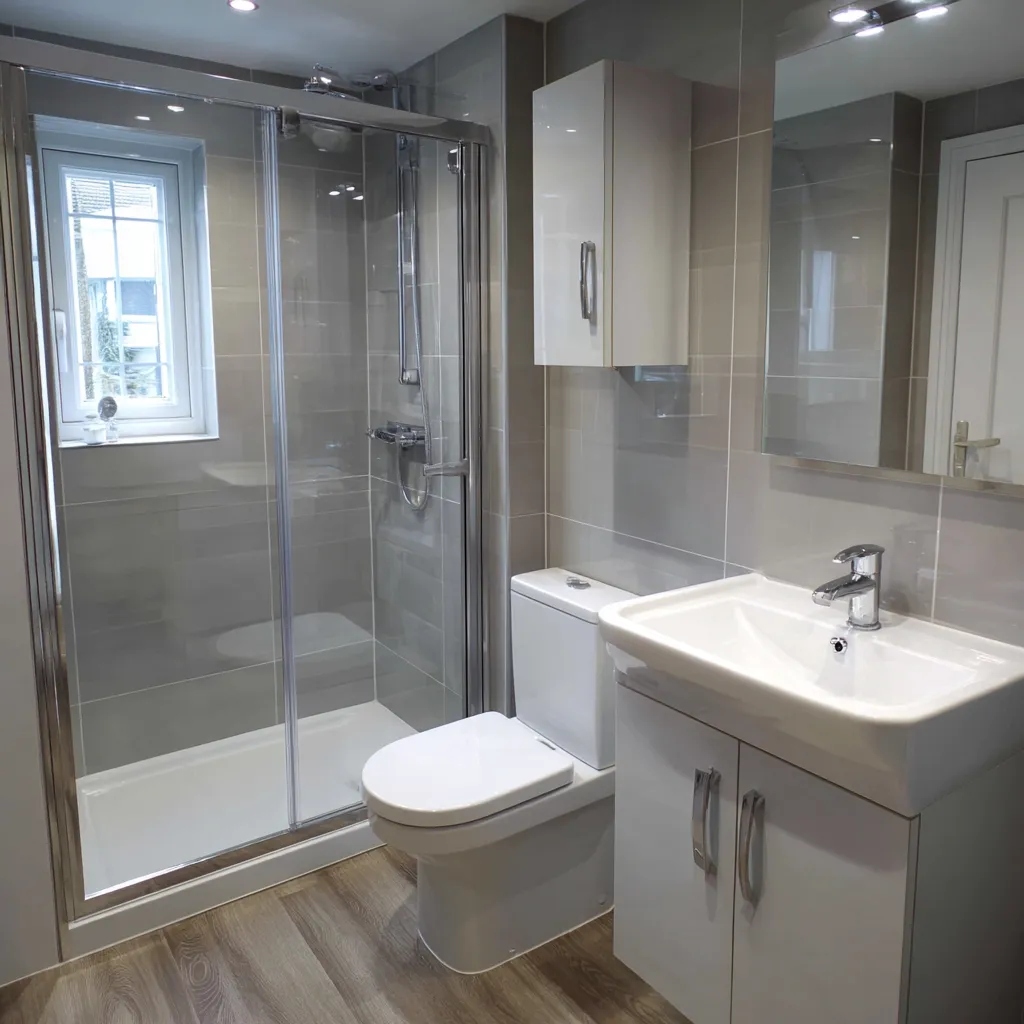
Deal with the Immediate Leak Safely
Stop using the fitting that appears to be leaking. If you know how to isolate its water supply safely, do so. Avoid touching electrical fittings or entering an area where water is close to electricity. A bulging ceiling or badly damaged floor also needs professional attention. Keep people away from the affected area and contact an appropriate emergency trade or service if there is an immediate danger.
Tell the occupier of the flat below if water may be reaching them. If you rent, contact your landlord or letting agent promptly. Notify the factor where shared parts of the building may be involved. Fitted Bathrooms Edinburgh's quotation service is for planned bathroom work; do not rely on an online renovation enquiry as an emergency response to an active leak.
Record What You Can See
Take photographs or video of the water, damaged finishes and affected rooms if you can do so safely. Note when the problem was first noticed and what was being used at the time. Keep messages from neighbours and any plumber's findings. These records can help explain the sequence of events without guessing how long a hidden leak has been present.
Ask the plumber to describe the source they found and the work done to stop it. Keep invoices and receipts for urgent work. Do not throw away damaged items before asking your insurer what evidence it needs, unless keeping them creates a safety or hygiene problem. If something must be removed, photograph it and record why removal was necessary.
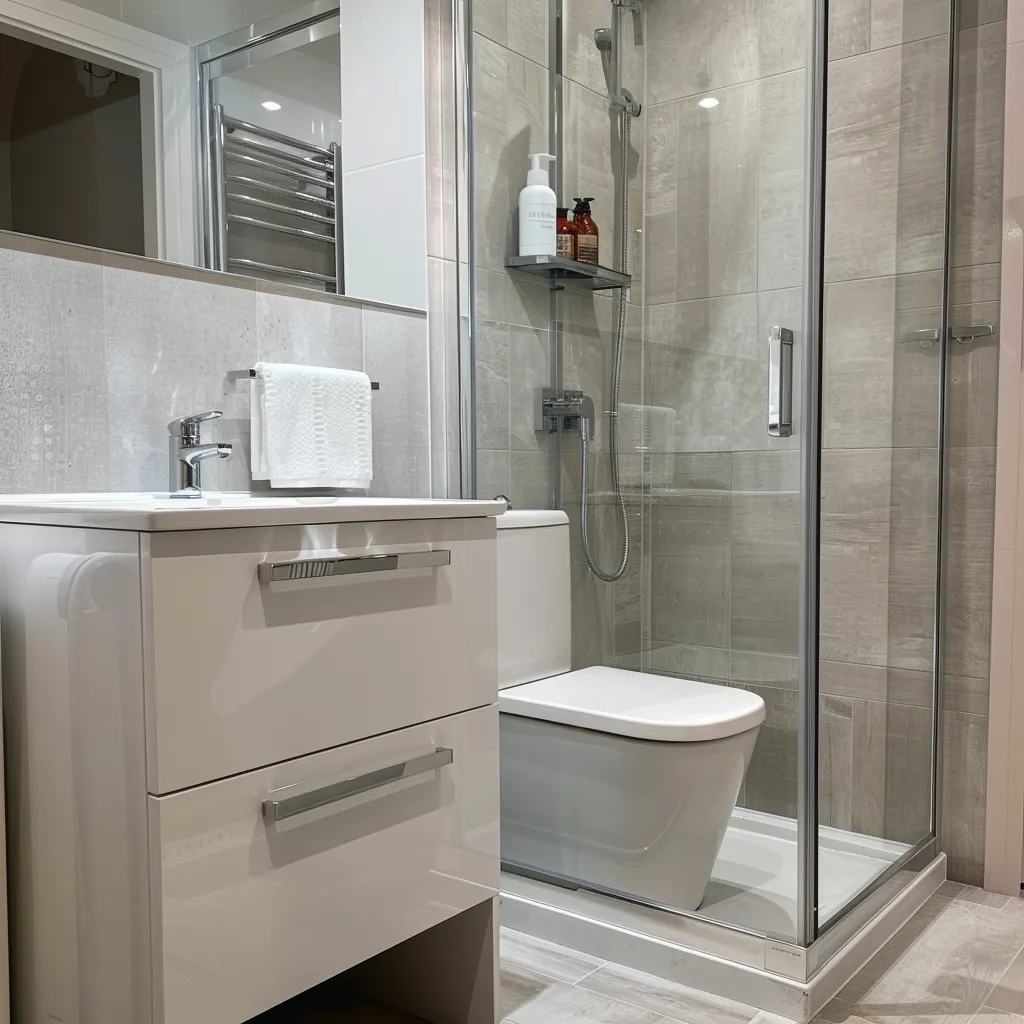
Contact the Insurer Before Agreeing Wider Repairs
Read your policy and contact the insurer or broker to explain what happened. Ask about emergency work, inspecting the damage and authorising repairs. Stopping the leak and repairing the damage are separate tasks, and the policy may treat them differently. Do not assume a policy will pay for a complete new bathroom because one part has failed.
The Association of British Insurers' home insurance guidance explains the broad role of buildings and contents cover. Your own policy decides the actual cover, exclusions and excess. Ask specifically about finding the leak, opening up surfaces and putting them back afterwards. Keep the claim reference and written instructions with your photographs and invoices.
Ask the insurer how it wants documents sent and whether there is a deadline for providing them. Save copies of anything submitted so you can answer later questions without trying to recreate the original account.
Find Where the Water Came From
A damp patch does not always sit directly below the fault. Water can travel along pipes or through the floor before appearing in another room. The problem might involve a fitting inside one flat, a hidden pipe or part of a shared system. Have the cause investigated rather than agreeing responsibility from the position of a stain alone.
Who arranges repairs and who pays can depend on the source, ownership, policy terms and the circumstances. Your factor, insurer or an independent adviser may need to explain this for your building. Ask your insurer to explain any cover for damage to another flat and whether it needs to speak to the other household. Do not assume the flat above must automatically pay every cost simply because water appeared below it.
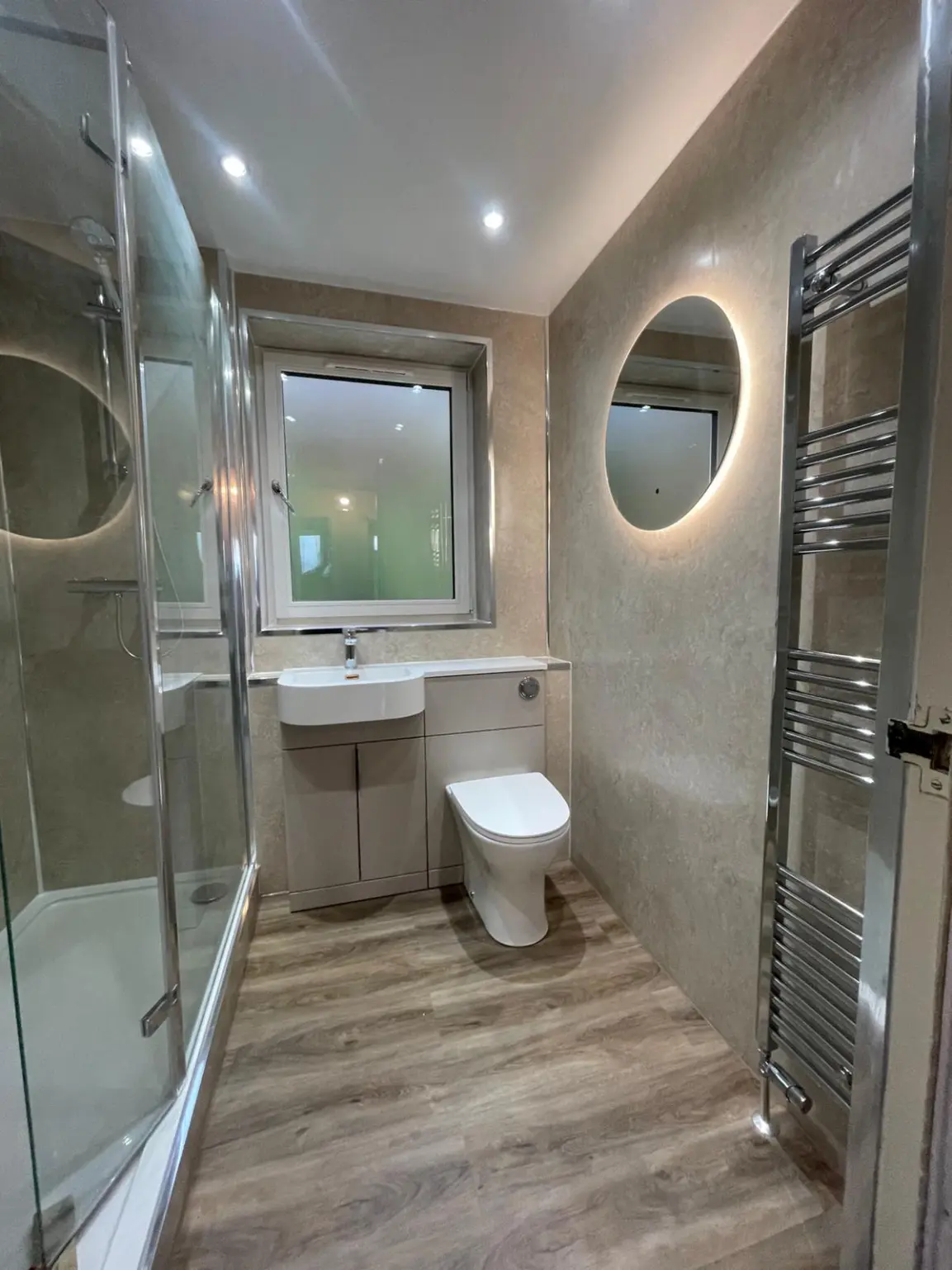
Allow the Room to Dry Before Covering Damage
Once the leak has stopped, ask what needs to dry, be removed or be repaired before new finishes are fitted. A wall that looks dry on the surface may still need further checking. Agree how drying will be assessed and who is responsible for that decision. Covering damaged or damp material too soon can leave the underlying problem unresolved.
Separate necessary repairs from any improvements you would like to add. If you decide to change the vanity, move the shower or upgrade the floor at the same time, ask for those costs to be shown separately. Our guide to damp in Edinburgh bathrooms explains why condensation, plumbing leaks and other sources of moisture need different responses.
Keep Repair Details for the Future
After the work, keep the report, photographs, invoices and relevant product details. Ask where isolation valves and removable access panels are located. Check that the repaired fittings have been tested and that any remaining work is recorded. If another mark or leak appears, report it promptly rather than assuming it is only an old stain returning through the paint.
When the immediate problem is resolved, our tenement bathroom fitting service can discuss planned replacement work. Read the bathroom renovation checklist before agreeing a wider refit. Tell the fitter about the leak, repairs already completed and any insurer requirements, so the new quotation deals with the room's actual condition and keeps optional changes clear.